
How to Search the Seminole Court Docket
The city publishes no standalone docket database for public searching. Begin at the official Seminole Municipal Court page. There the court gathers its contact details and citation routes. Have your citation or notice handy, along with the name and appearance date. The city's payment portal takes payments. It does not put the whole case file online. A city search and a county search answer different questions about a Seminole court record.
- Read the court name and appearance date on the citation or notice.
- Use the Seminole court page for a city citation, ordinance case, or municipal setting.
- Contact the Seminole clerk by phone or email when no public result appears.
- For a county or district matter, use the Gaines County clerk or statewide case channel.
- Confirm the date and required response with the office that keeps the record.
A case that belongs to the county may surface instead through Gaines County case search resources. A miss in one system proves nothing. Municipal, county, district, justice, and statewide channels each cover different courts, so check the level that matches the Seminole case number you hold.
Seminole City Hall Court Counter
Seminole Municipal Court sits inside City Hall at 302 South Main Street, Seminole, Texas 79360. The city names Judge Mike Shain and clerk Khira Kutz. Call (432) 758-8800 or write to municipalcourt@cityofseminoletx.org. The counter keeps Monday through Friday hours, 8:00 a.m. to 5:00 p.m. It closes from noon to 1:00 p.m. Plan around that lunch closure if you need a same-day answer from the clerk.
Seminole Municipal Court
302 South Main Street
Seminole, Texas 79360
(432) 758-8800
Monday-Friday, 8:00 a.m.-5:00 p.m.
Closed noon-1:00 p.m.
A Seminole court record will not surface online. The clerk's counter is the best route. Ask whether a record request can go by email or mail. Ask which details identify the case, and whether a copy fee applies. Confirm the accepted mailing address and payment method before you send anything. That one call keeps your request from stalling or landing in the wrong office.
The Seminole Municipal Court
Seminole Municipal Court handles Class C misdemeanors that happen inside the city. Charges may come under state law or a city ordinance. Its docket covers traffic and parking cases, public intoxication, some alcohol and tobacco offenses by minors, ordinance violations, and truancy. Keep these municipal records separate from the constitutional Gaines County Court docket or a 106th District Court case. They are different files in different hands.
The city court overview names the judge and staff. It lists hours, explains jurisdiction, and links out to common citation steps. Use the route that matches your Seminole matter. Staff can walk you through filing, a response, or record questions. They cannot give legal advice, though. Bring any strategy questions to a lawyer.
The official Seminole court page sets out the court's own description of its jurisdiction and procedures.
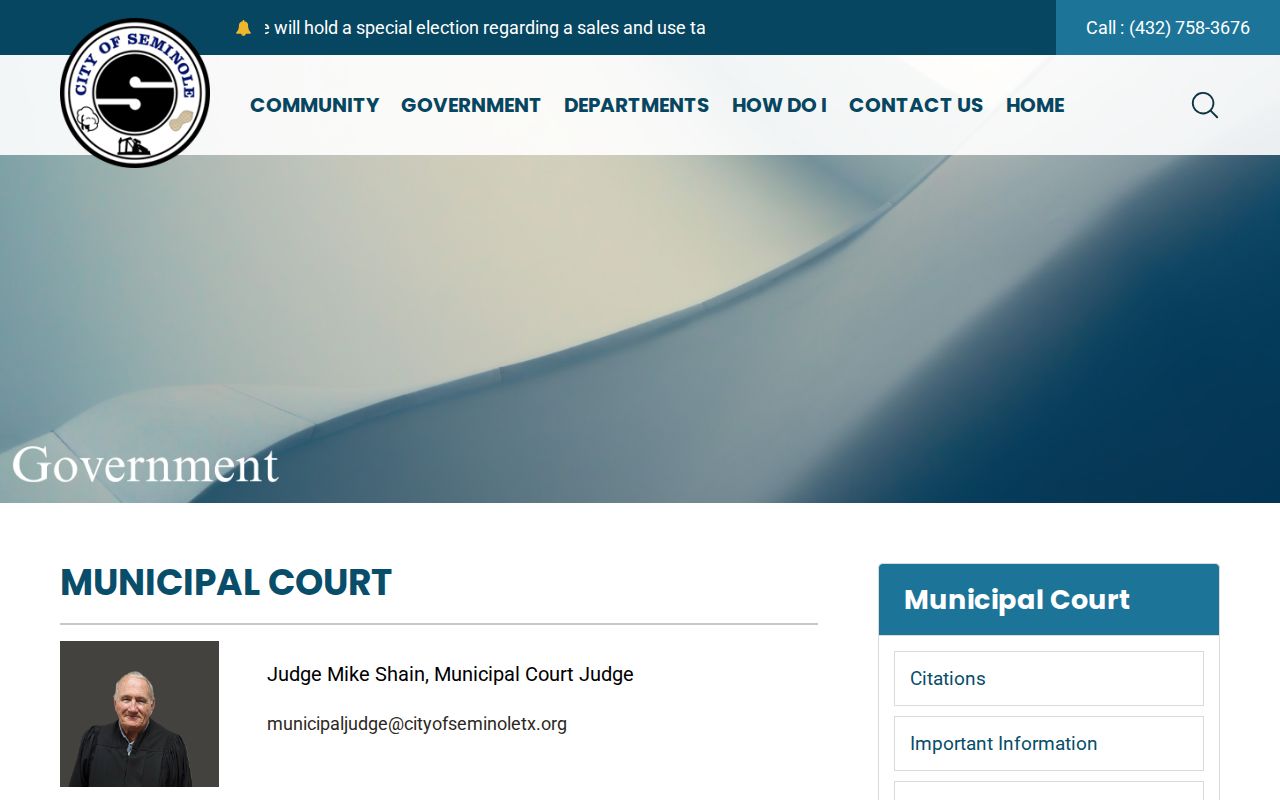
That city page is the channel that owns Seminole municipal records and settings. It also helps you tell the municipal clerk apart from the Gaines County Clerk and the District Clerk, so a docket request goes to the right office.
Seminole Citations Promise Appearance
Signing a Seminole citation promises you will appear. It is not a guilty plea. The Seminole citation instructions set the window: appear no earlier than two days after issuance and no later than the date printed on the citation. A phone call does not count as an appearance. The difference matters when a Seminole court docket shows no later event and you assume a quick call satisfied the citation.
Key point: A call can clarify the required step, but the city expressly says a phone call is not an appearance.
The city's promise-to-appear rule appears in this official source image.
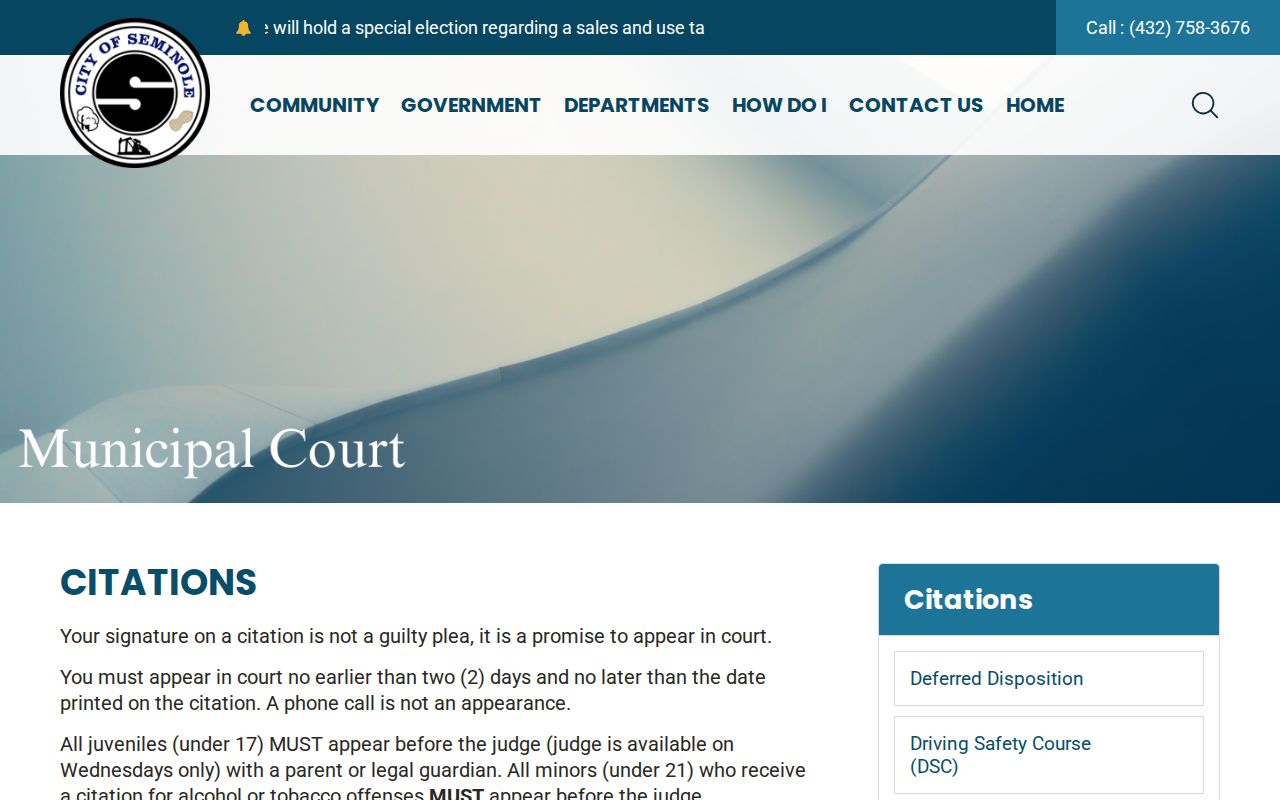
The citation date sets the next required Seminole court action, and signing it is not a conviction. Keep the signed copy. Its court name, date, and charge are the exact details a clerk needs to pull the right municipal record.
Seminole Court Dates and Settings
Start with the appearance date printed on the citation. A Seminole docket entry or a clerk's reply may then point to an arraignment, pretrial, trial, compliance, or other setting. A setting is only a scheduled event. It is not the result of the case. Because the city publishes no complete searchable calendar feed, confirm resets and later orders with the Seminole clerk, and never lean on a payment screen as your only source for a hearing date.
| Date | The appearance or hearing date stated by the Seminole court. |
|---|---|
| Time | The stated time for a docket call or individual setting. |
| Location | Seminole City Hall unless the court directs otherwise. |
| Judge | The judicial officer assigned to the Seminole setting. |
| Setting Type | The event, such as appearance, pretrial, trial, or compliance. |
Bring the citation or notice when you ask the court to confirm a date. The clerk may report a reset. If so, write down the new date, time, and how the answer came. Posted settings can change. A missed appearance carries real consequences. The Seminole court itself remains the best source for current instructions.
Seminole Juvenile Court Rules
A ticket issued to a driver under 17 in Seminole works differently. It is not a standard payable citation. The city requires these young defendants to appear with a parent or guardian before the judge. Juvenile hearings happen on Wednesdays only. That is a scheduling fact, not a promise that every juvenile matter shows on a public Seminole court docket. Some alcohol and tobacco cases involving people under 21 also demand an appearance.
Youth records carry extra protection. A juvenile case file may not be open the way an adult municipal record is. Ask the Seminole municipal clerk what notice or authorization is needed. Do not send birth dates or other sensitive identifiers through an unverified channel. A parent should confirm the assigned Wednesday and the required adult attendance before traveling to City Hall.
Seminole Traffic Tickets
A ticket written inside Seminole usually lands with the municipal court. Read the citation itself to be sure. The city lets you enter a plea, request deferred disposition, ask for a driver safety course, pay in full, or take other citation actions. Eligibility turns on the violation and what the court directs. The Seminole payment page also warns that not every violation can be resolved online.
Paying is more than a search step. The city cautions that payment may count as a conviction. That conviction gets reported to the Texas Department of Public Safety. Online payments are not refunded. If you want to fight the charge or explore another resolution, contact the court first. For county-wide context, Gaines County traffic court records help. But the Seminole clerk controls the local city file.
The official Seminole payment page spells out the city's payment route and its limits.
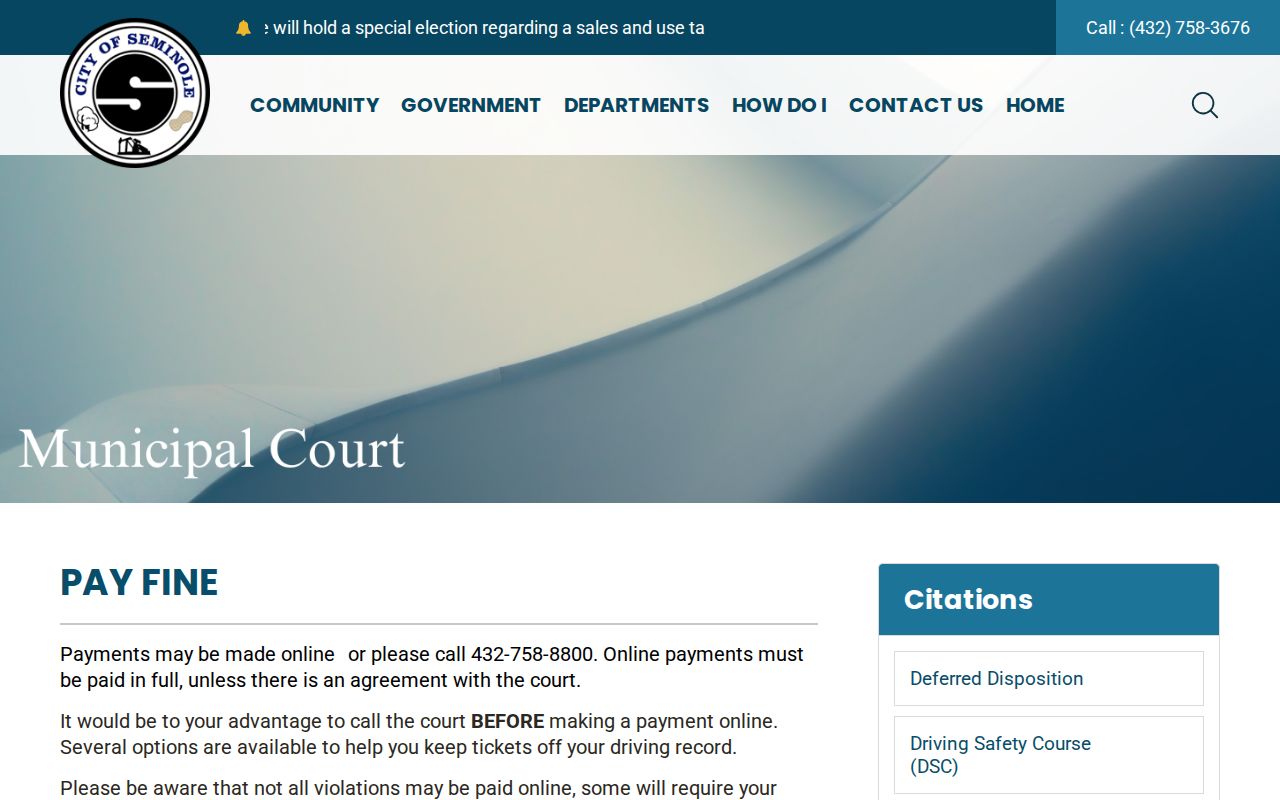
The city treats an online payment action and a full Seminole docket search as two different things. A payment that goes through proves nothing about later filings or events in the court record.
Seminole Payment Changes Records
The Seminole court takes payments several ways. Pay in person with identification, by cash, money order, credit or debit card, by phone, or online where the violation allows. Some cases need a court agreement first. No single flat fee is published for every violation. The amount should come from the citation or the clerk rather than a guess. Ask for the total due and any conditions before picking a route.
| Goal | Best Seminole route | Why it matters |
|---|---|---|
| Find status | Contact municipal clerk | The payment portal is not a full docket search. |
| Pay | Use a city-approved method | Some violations cannot be paid online. |
| Contest | Follow court plea instructions | Payment may resolve the charge as a conviction. |
| Ask for an option | Contact court before payment | Deferred disposition or a safety course may have conditions. |
For the city's own appearance, payment, warrant, and DPS warnings, go straight to the important-information page.
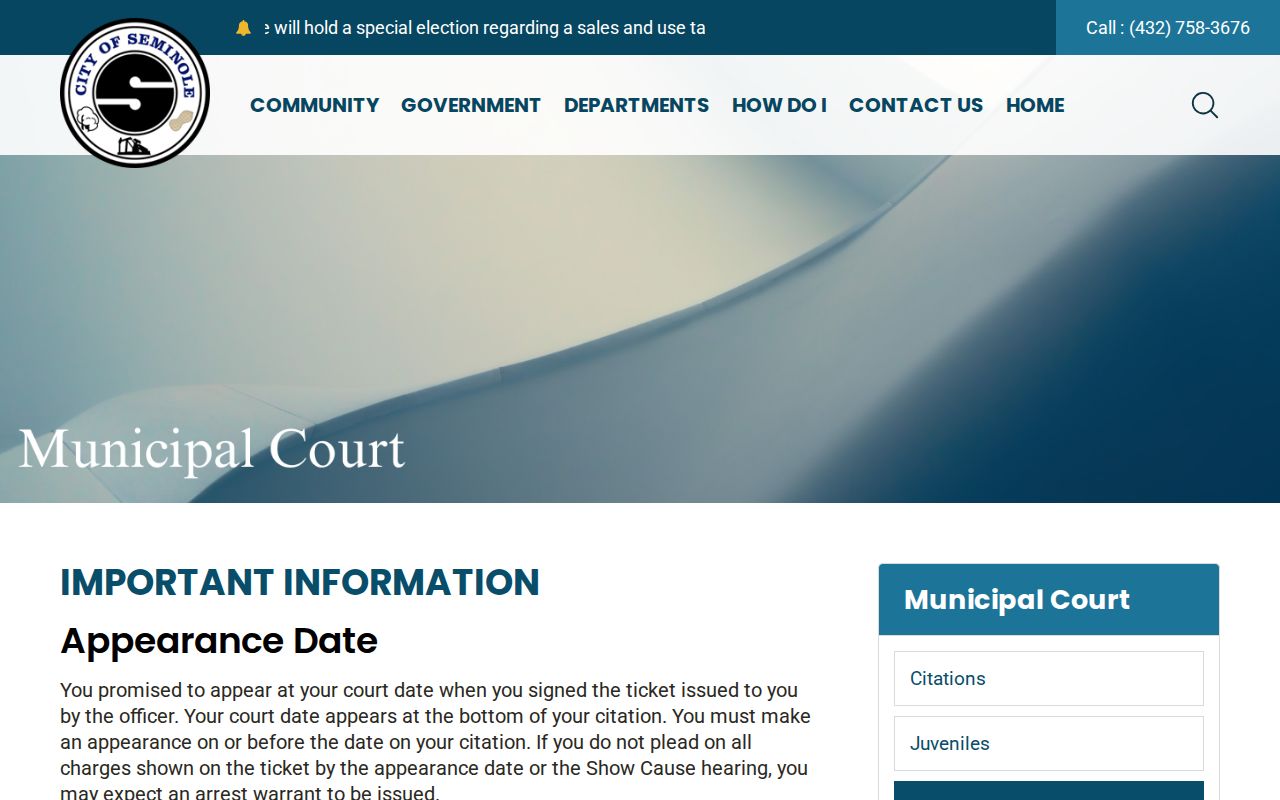
The official screen makes one thing plain: decide on your response before sending money. Save the receipt and confirmation number. Then check that the Seminole court applied the action to the right citation.
Where Seminole Cases End Up
Not everything in Seminole stays in city court. Class A and B misdemeanors may be filed at the county level. Felonies and broader district matters go to the 106th District Court. The Gaines County Clerk may hold county civil and probate files. The District Clerk maintains district cases. Check the court name printed on a citation, pleading, or notice. It is the best routing clue.
Docket flow: Seminole Municipal Court › Gaines County Courts › Gaines County Court or 106th District Court
A city citation starts in Seminole. A county matter points to the Gaines County court docket overview. When the right clerk is unclear, statewide re:SearchTX can help, though coverage varies and a missing result never overrides the originating court's own file. eFileTexas is a filing channel, not a free public docket archive.
Seminole Warrants After No Response
Fail to appear or contact the Seminole court as directed, the city warns. A warrant with added fees can follow. Warrants stay active until paid in full. Those are official Seminole procedure warnings, not a statement about any single case. An empty payment screen answers nothing about a warrant.
If a date has passed, call the Seminole court and ask what the record shows. Never infer warrant status from an online screen. The clerk can name the accepted response route. Ask whether a personal appearance is required. Keep a receipt for anything completed, and ask when the Seminole docket will reflect it.
Missed date: Call (432) 758-8800 and confirm the Seminole court's instructions; a phone inquiry alone is not an appearance.
Public Access to Seminole Court Records
The Seminole municipal clerk handles requests for municipal case records. The city offers no separate public docket search. Ask for the exact item needed. Spell out whether you want a docket entry, a setting, a disposition, or a copy. The court can say whether to request it in person, by mail, email, or another accepted route. It can also say whether a fee, identification rule, or redaction applies. Clear wording also keeps a record request from being mistaken for a payment inquiry.
Key Rules:
Texas Rule of Judicial Administration 12 governs access to many judicial records outside case records controlled by another rule, order, or law.
Texas Government Code section 552.0035 says judiciary information is governed by court rules or other applicable law.
Texas court rules supply current procedure and redaction standards.
Juvenile, sealed, expunged, mental-health, and child-protection material may be withheld or redacted. One open Seminole docket entry does not make every document public. Ask the clerk which rule controls, and skip sending Social Security numbers, financial details, or birth dates the request does not need.
Seminole Courtroom Conduct Terms
Seminole bans weapons, food, tobacco, and loud electronics inside the courtroom. The point is basic courtesy in a formal setting. Silence your phone and follow whatever the Seminole judge tells you. A Seminole docket may be public. That does not mean you may record the proceeding or share anyone's private details. Conduct rules still hold. They apply even when the underlying court docket is open to view.
- Appearance
- A required Seminole response made in a form accepted by the Seminole court.
- Setting
- A scheduled Seminole court event, not the final outcome.
- Disposition
- The recorded resolution of the Seminole charge.
- Reset
- A move from one Seminole court date to another.
- Docket
- A Seminole schedule or event history, depending on the local use.
Say a Seminole docket entry and a later notice disagree. The Seminole clerk's current direction wins, so take that as your next step. Bring the citation or notice with you. Staff can then match the Seminole case without asking for broad personal details. Ask first before carrying in any device that Seminole court rules might restrict.
The local distinctions matter at every stage. Answer a Seminole citation in Seminole, not somewhere else. A county pleading goes to the county clerk instead. A Seminole payment page shows Seminole procedure, not the whole record, and a Seminole appearance date can still lead to a later setting. A quick answer from the Seminole clerk confirms which event is current. Keeping these lines straight prevents a Seminole case from getting tangled with a Gaines County matter and routes each request to the office that can actually answer it.